Queens of the Stone Age

The Origin: The lineage of QOTSA is etched into the negative spaces of the landscapes that shaped them. Their evolution traces back to the "beautiful void" of the Palm Desert, where frontman Josh Homme helped forge the scuzzy, heavy fuzz of Kyuss. Post stoner-rock, a move to the Pacific Northwest allowed Homme to absorb the lush, dark textures as a guitarist for the Screaming Trees.

With these contrasting terrains serving as a creative crucible, Homme’s return to California’s Southwest blended desert isolation with the grit of LA’s urban sprawl. Through a rotating cast of collaborators like Dave Grohl and Mark Lanegan — as well as  the collaborative alchemy of The Desert Sessions— Queens of the Stone Age found the ‘sonic edge’ where art meets hard rock: grimy dark chords dissolve into otherworldly melodies, a contrast held in place by the evocative, ghostly weight of Homme’s delivery. 

From Desert Death Drives to “Empire of Death”:

While QOTSA’s lyrical themes range from the absurd to the sublime, a constant throughline remains: the "death drive” — songs that explore the involuntary urge toward self- destructive states, or a desire to find the stasis of final stillness. This is evident in the jagged extremes of "Song for the Dead" and the somber textures of “I Appear Missing.”

Spanning decades and eight full-length albums, QOTSA’s existentialist allure finally found a focal point in the Paris Catacombs. This project — a performance deep within the “Empire of Death” — was the culmination of Homme’s long-standing spiritual connection to the ossuary, a sacred space aligned with the band’s ethos and marked as a word of warning at its entrance: “Arrête! C'est ici l'empire de la mort!” (Stop! This is the empire of death!). 

The Emergence:

Following the surreal experience of recording Alive in the Catacombs, QOTSA emerged from that awe-inspiring space tethered by an electrified gossamer thread — carrying a signal of profound reverence for the souls held in compressed silence.

The Invitation: The Fourth Place 

Inspired by the primal sensation of hearing the unheard —those negative spaces vibrating within the earth — QOTSA unveiled “The Catacombs Tour.” This, a departure from the standard tour experience, was reimagined as a piece of live, dark art designed to mirror the subterranean atmosphere of Paris. By selecting historic, hallowed venues and restructuring the performance as a three-act ritual, the band created an extra-sensory experience featuring fully orchestrated reworkings of their most poignant arrangements, made complete by a chamber ensemble. 

In this setting, QOTSA operates through the logic of the "Fourth Place” — a concept found in sacred composition where an intentional void is left to invite a higher or unseen presence. Just as a painter uses negative space to define a subject, the band meticulously orchestrates the performers, the venue, and the production to leave an open seat at the table, or space for the fourth element: the participant, inviting them to take a bite, see the unseen, and hear the unheard.

At the center of this iconographic ritual sits the apple. More than a still-life image, it acts as a foundational symbol in art, a bridge between worlds and the symbolic key that sustains the soul in transition, floating within that negative space.

ACT I: 

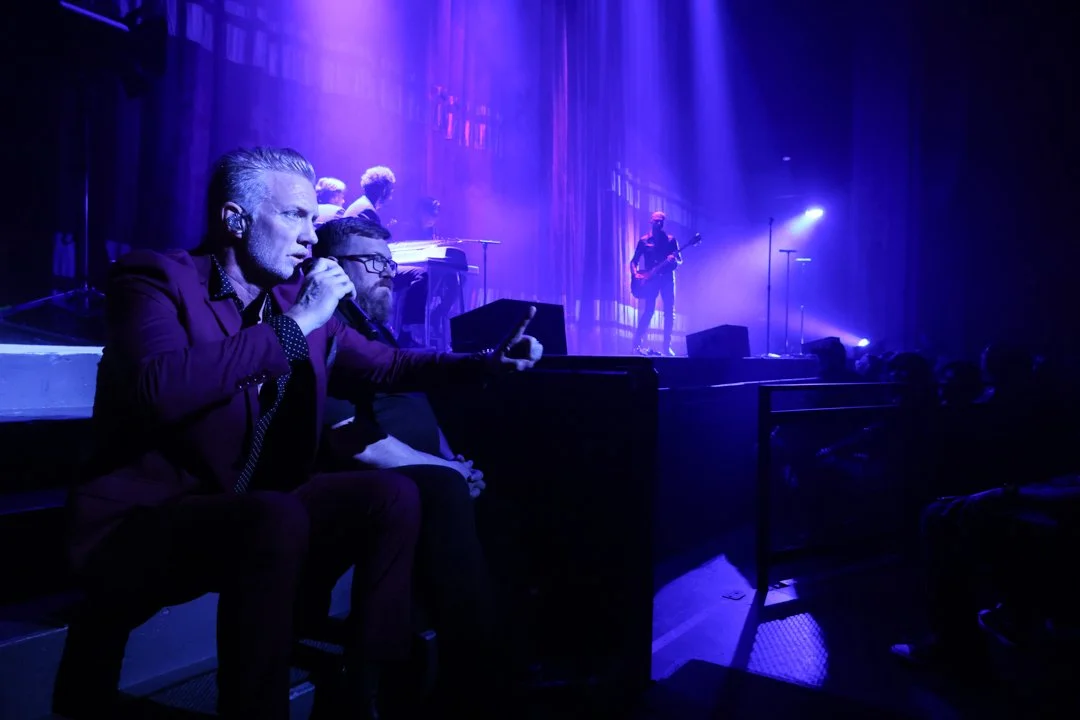
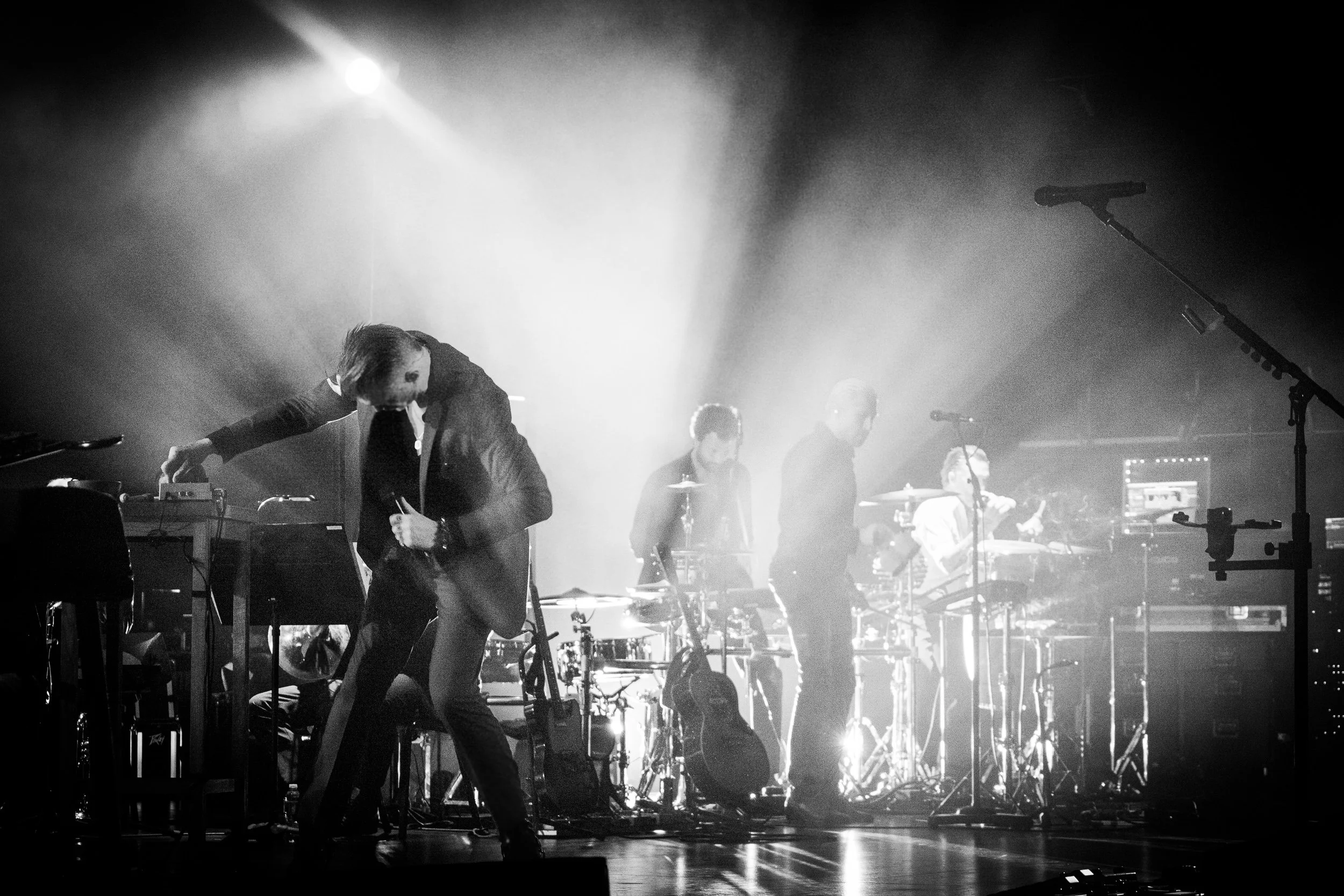
The Scene: From under a blanket of black and blue shadows, Josh Homme’s silhouette appeared — not as a frontman, but as a threshold figure. He sat perched on a chair, holding a single, vintage “trouble light.” Encased in its stark metal-like cage, the bulb acted as a solitary eye; a vigilant ghost light watching over the theater’s slumber to ward off the void. As that lone amber glow cast deep, shifting shadows across Homme’s face, the haunting, skeletal chords of “Running Joke/Paper Machete” filled the venue. It triggered a liminal shiver — a hair-raising sensation that sparked across the audience. In that moment, the boundaries of the outside world dissolved, replaced by a theater where spectators became full participants in the shadow-play. 

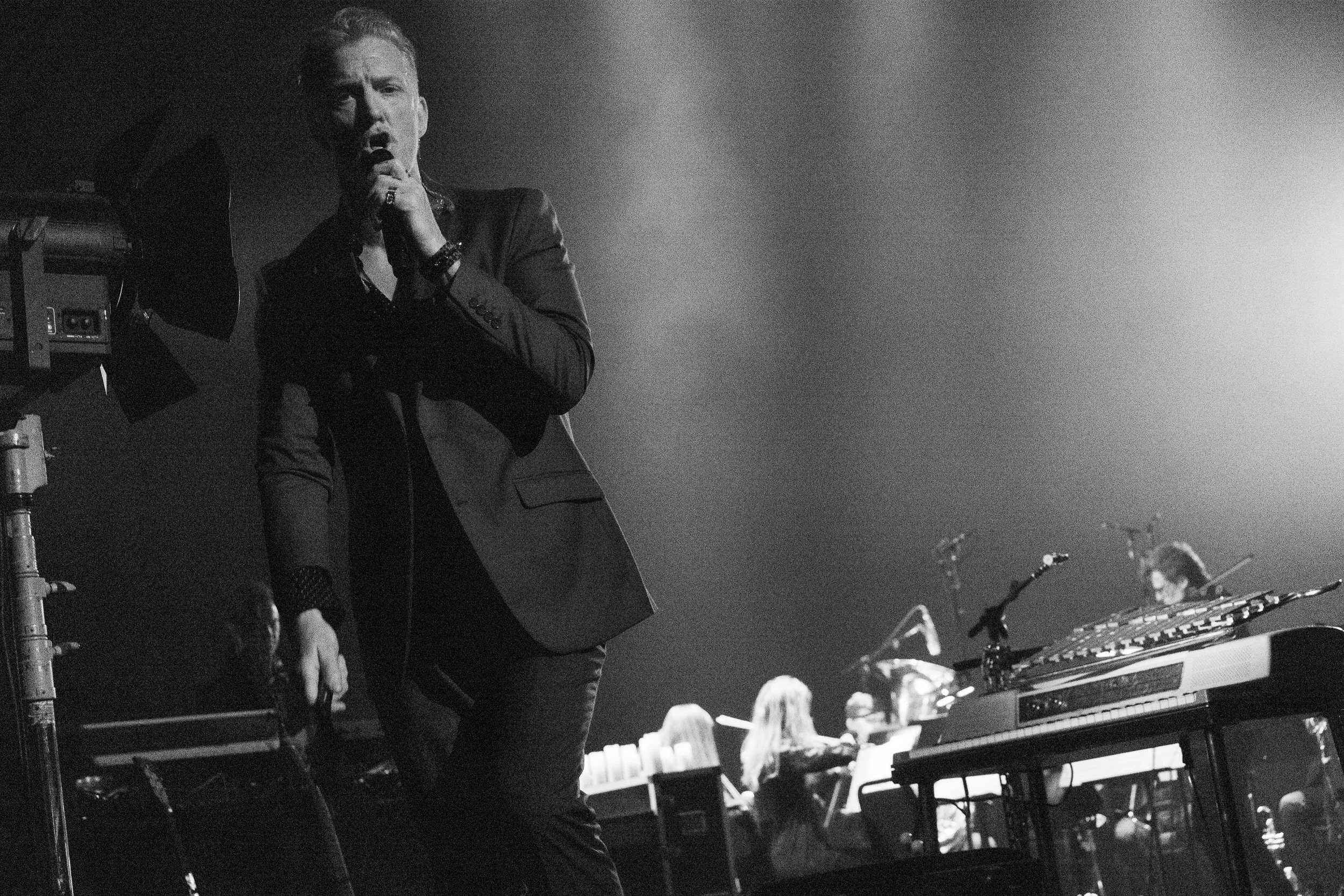
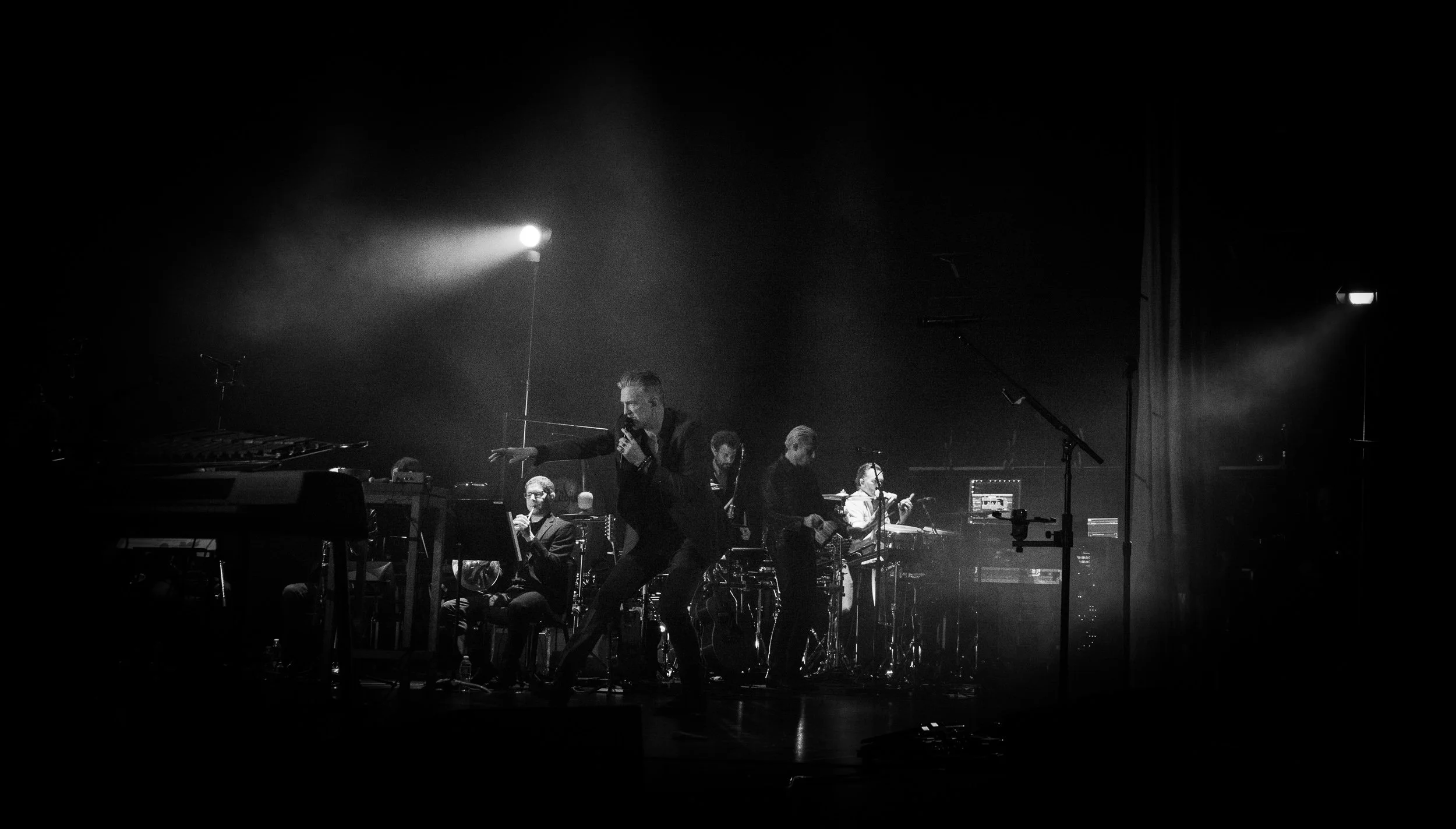
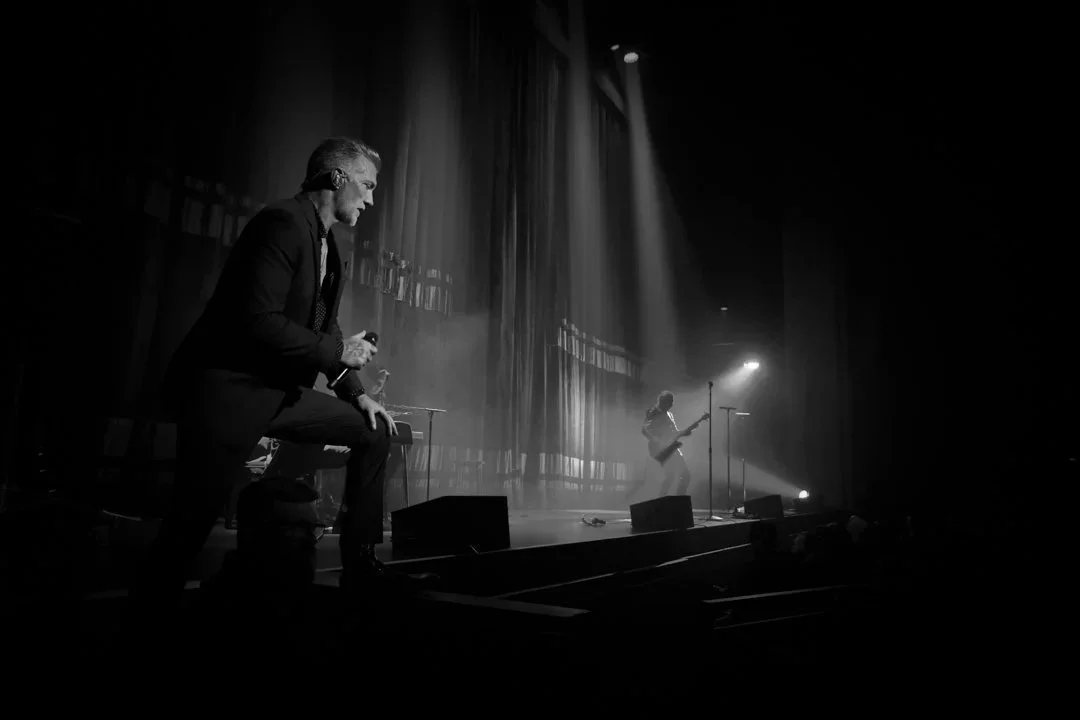
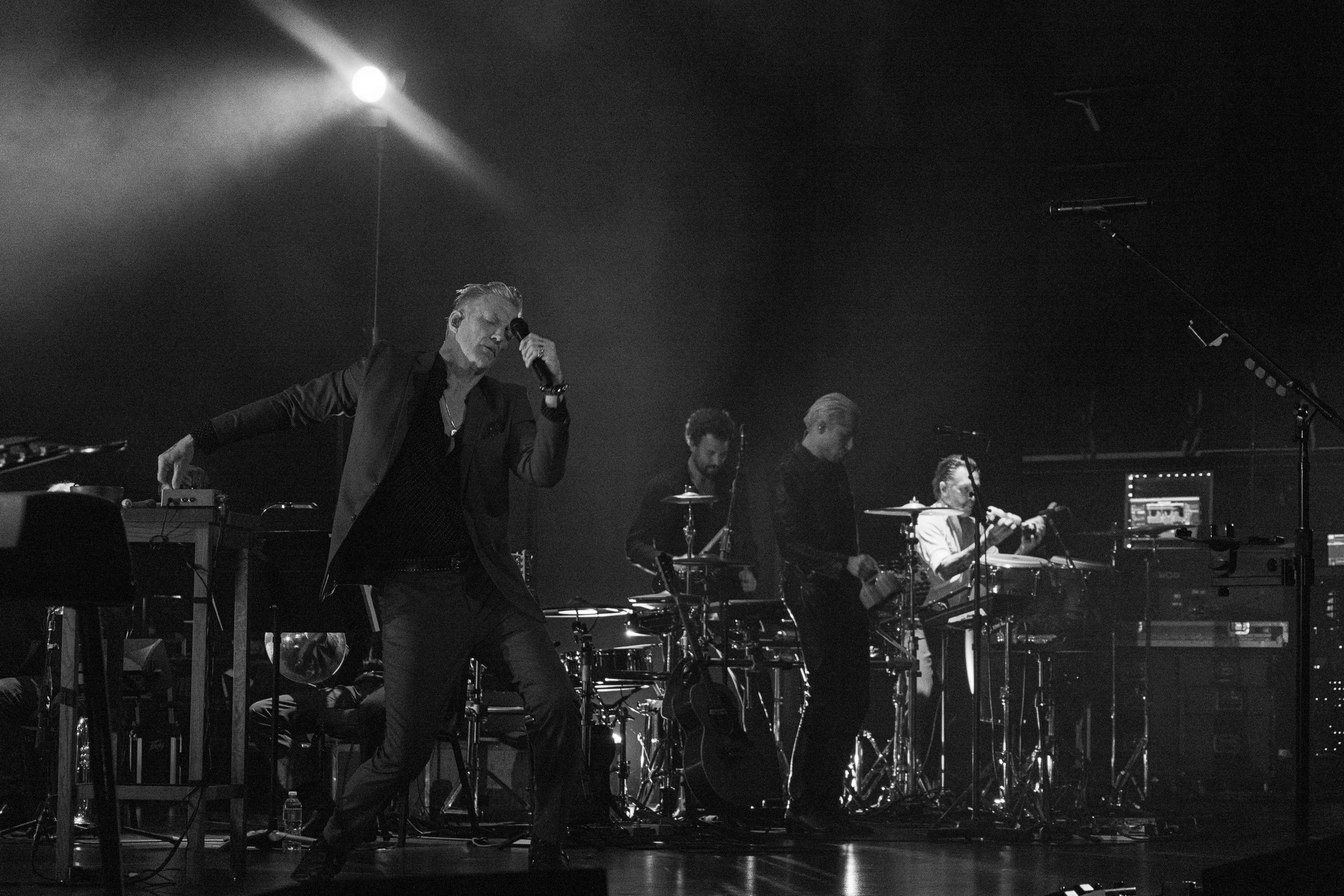
The Sound: Stripped of QOTSA’s usual desert-rock armor, the music emerged as a series of searing, solitary confessions. Homme’s voice full — yet fragile — vibrating in the negative space of the hallowed venue. As the swell of the Wurlitzer began to swirl, its haunting notes asked the room to listen to the “here” now. Guiding the eye with his light, Homme tilted the glow toward the glockenspiel and the string ensemble for the eerie intro of “Kalopsia,” before turning the light back upon himself as his voice cut through the brilliant “Villains of Circumstance.” The brooding bassline of “Suture Up Your Future” and the earnestness of “I Never Came” followed, as he sat on the stage steps to personally address the front row. In doing so, the atmosphere shifted further into a shared space of shimmery and shivery reflection, allowing the themes of mortality to breathe.

The Symbols & Meaning: The "threshold” began here. Through the interplay of light, lyrics, and longing, Homme marked a total departure from the traditional rock show, replacing it with a search for proof — something profound to be found within this strange sound-state of nothingness. 

Act II:

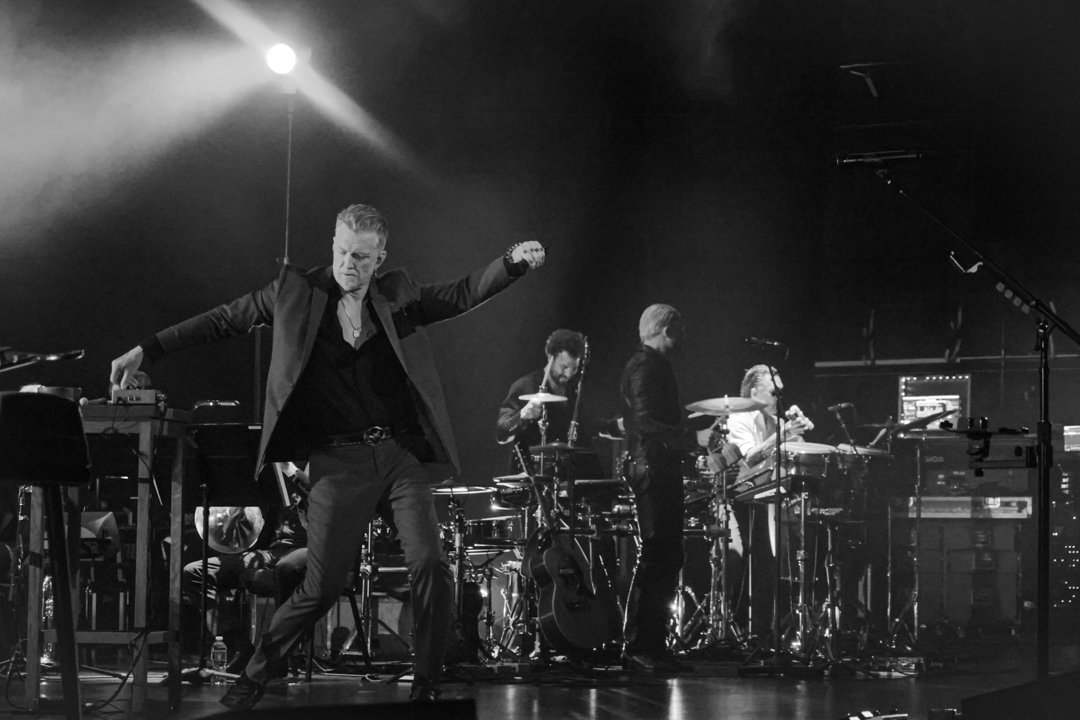
The Scene: The blue shadows of the pre-dawn state dissolved into a total, suffocating black. Homme’s voice, in spoken word, ushered in a slit of sanguine light — a saturated red that crisscrossed and bled, creating deep, elongated shadows across the sacrosanct space. This shift was a visceral jolt; a Rubicon of complex pain and panic. Homme’s threshold figure was now a slinky, ink-black silhouette set against a panoramic, incarnadine glow for a suite of "Someone's in the Wolf/A Song for the Deaf/Straight Jacket Fitting.” His movements grew frantic, overwrought with desperation. He wielded a sharp meat cleaver, its metal edges reflecting a jagged red glare. He moved with it—at times striking the stage floor, other times carrying it toward an audience on tenterhooks. His cutting motions sliced the air, a physical plea asking the room, “Tell me which way is out?”—only to find the exit was nonexistent.

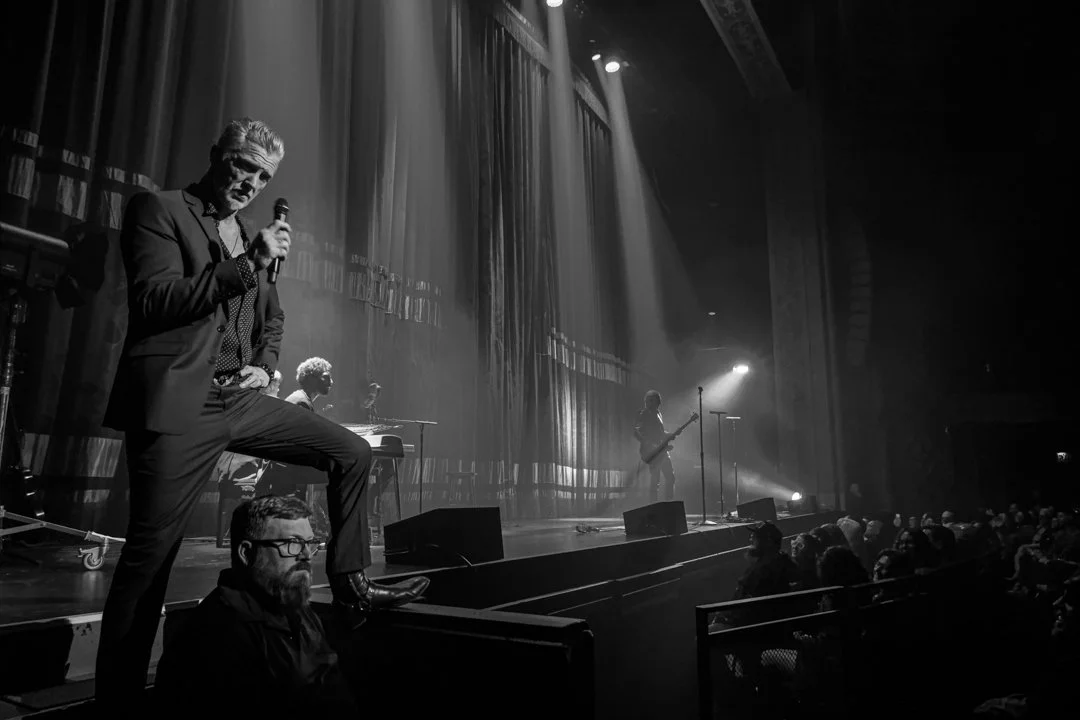
The Sound: The vulnerability of the acoustic set was consumed by a full chamber ensemble, surrounding the negative space with a crushing, cinematic weight. This was the sound of the crucible—a wall of densely layered horns and swelling, dissonant strings. The band performed an epic, melancholic "Mosquito Song," where the intricate arrangements augmented into a percussive explosion. The sonics ramped to a fever pitch as Homme stormed toward the soundboard for a heavy, distorted “Keep Your Eyes Peeled,” luring the audience deeper into the orchestrated chaos as if trying to decipher the rules of a world gone wrong.

The Symbols & Meaning: This chaotic showcase highlighted the sensation of being nailed to a present moment of unfathomable pain within abhorrent experiences. The meat cleaver and blood-red saturation were emblematic of the desperate urge to cut through complexity and find a quick solution. Here, the "Fourth Place" became a shared experience of entrapment in effort.

Act III:

The Scene: When the curtains pulled for the third time, the oppressive state was released. Smoky yellow hues vacillated before finally settling under a single, brilliant white stage light—a simulated full moon. QOTSA and the ensemble returned to a grounded, solid state. The venue moved back toward real-time as Homme released the need to control his agony unfurled; in turn, the dread of being nailed in place evaporated. The distance between performer and audience finally closed.

The Sound: The final movement opened without rupture. The sly “You Got a Killer Scene There, Man…” set a gritty tone that folded inward as the pitch-shifting glissando of the strings brought forth “The Vampyre of Time and Memory” and the hypnotic trip of “Auto Pilot.” The music now functioned again on its own merit. As the scintillating piano intro to “…Like Clockwork” settled into the theater, the transition back to reality was felt churning — a slow, deep movement as the ritual dissolved.

The Symbols & Meaning: The single white light signified the zenith of the night. This return to a grounded, pristine stage indicated that the panic and pain of the earlier descent had been transformed. This was the ritual’s proof: that by enduring the darkness, the void is traded for a new perspective — something good to die for, a reason to find something beautiful to live.

ENCORE: “Sicut unda fluxerunt dies nostri” 

The Scene: Josh Homme returned to the stage as the frontman, with no sign of the ghost light or red terror — just a wash of bright, clear stage lights. Carrying a set of sleigh bells, his presence immediately grounded the audience back in real time. With deep gratitude, sharp humor, and a heavy, reverent nod to the departed — most notably Mark Lanegan —the rock-goth balladeer asked the room: “Did you enjoy the escape?”

The Sound: The answer arrived as waves of applause and the luminous, a cappella notes of “Long Slow Goodbye” rose to the rafters. Performed alongside Michael Shuman, the stripped-down arrangement served as a final, fragile bridge between worlds, letting days flow.

The Symbols & Meaning: “Sicut unda fluxerunt dies nostri” — “As a wave, our days have flowed.” 

This sentiment is etched in stone near the Fountain of the Samaritan in the Paris Catacombs, a reminder of life’s fleeting pulse. The journey ends where it begins: in the negative space.

Megan Perry

Megan Perry Moore is an accomplished photographer recognized for her work featured in Rolling Stone, Guitar Player, Revolver, Electronic Musician, Music Connection, and SPIN. She also served as Alternative Press' In the Studio columnist and photographer. Megan is the author of two books - WIRED: Musicians’ Home Studios, (Rowman & Littlefield) and How to Be a Record Producer in the Digital Era (Penguin Random House/Billboard Books).

Her photographic work includes solo exhibitions in RealNetworks, Circa, and Insect Mind in Seattle, WA. Megan developed the photographic series Saving the Soul of the Snow Leopard in conjunction with the Snow Leopard Trust as part of their annual fundraiser.

Currently, Megan is a music journliast and photographer for Music Connection. Her new art space, - the gallery- highlights large-scale photographic collections. She is also working on the book WIRED v2.0 - a follow-up to WIRED - a behind-the-scenes depiction of artists at work in their personal recording spaces that included Snoop Dogg, Sonic Youth, No Doubt, and many others

Contact: megan@meganperry.com / 310-261-5393

https://www.meganperry.com
Next
Next

Good Riddance